
Remote PAM for Zero Trust
Work Securely, Without Thinking About It
Implement Zero Trust consistently — in one system: With VISULOX, you control privileged access, monitor all actions in real time, and create reliable audit evidence. Effortlessly.
450+ IT teams in European companies with critical, regulated infrastructures trust VISULOX










Zero Trust Concepts
How Do I Best Protect Systems and Data?
Security concepts often fail not because of technology, but because of people: too many access points, changing roles, external parties, and constantly new requirements. Rules get bypassed, exceptions persist, and responsibility becomes unclear.
70%
of companies plan to implement or expand a Zero Trust approach.
60%
cite missing integration into their systems as the biggest obstacle to adopting Zero Trust.
30%
less does a cyber incident cost on average with a unified Zero Trust and PAM approach.
Building Block of Your Security Strategy
Zero Trust in Days,
Not Months
With VISULOX, Zero Trust is no longer an illusion. Control effortlessly who has access to what, when, and how.
Strategy
Implement Zero Trust Without Rebuilding Your IT
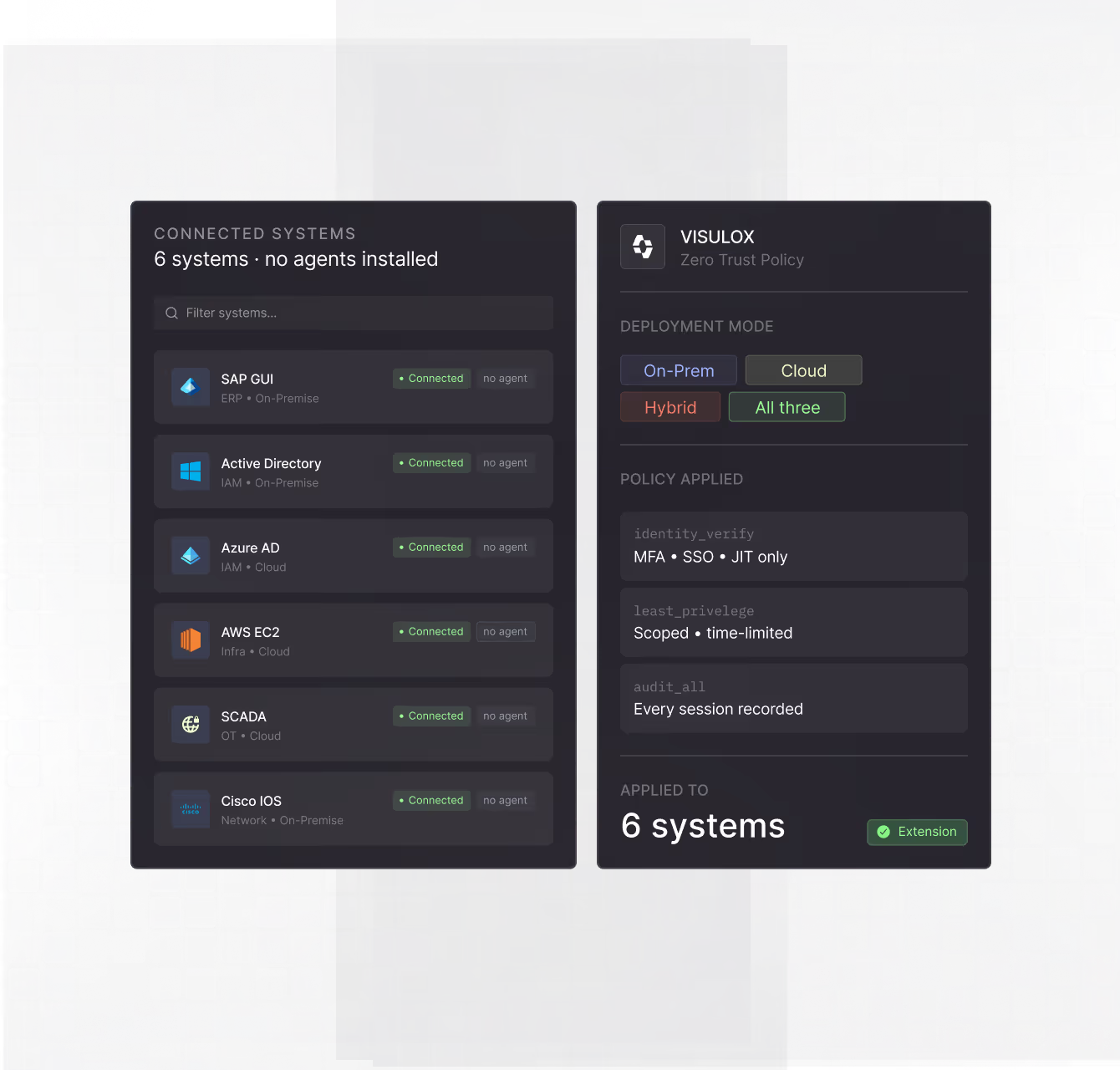
With VISULOX as a building block of your Zero Trust strategy, the solution complements existing systems and processes rather than replacing them. The security architecture grows in a targeted way — making Zero Trust realistically achievable with your IT resources.
External Access: Granular, agentless, and without coordination chaos
Internal Access Management: Secure and simplify work from anywhere
Built for Zero Trust: Easily implement all building blocks such as Multi-Factor Authentication and Just-in-Time access
Always traceable: Automated compliance reporting, tamper-proof recordings, and audit trails
Seamless integration with existing IT and OT systems
Suitable for on-premise, cloud, and hybrid environments
Zero Trust as an extension, not a rebuild project
Transparency
Make Every Access Truly Visible
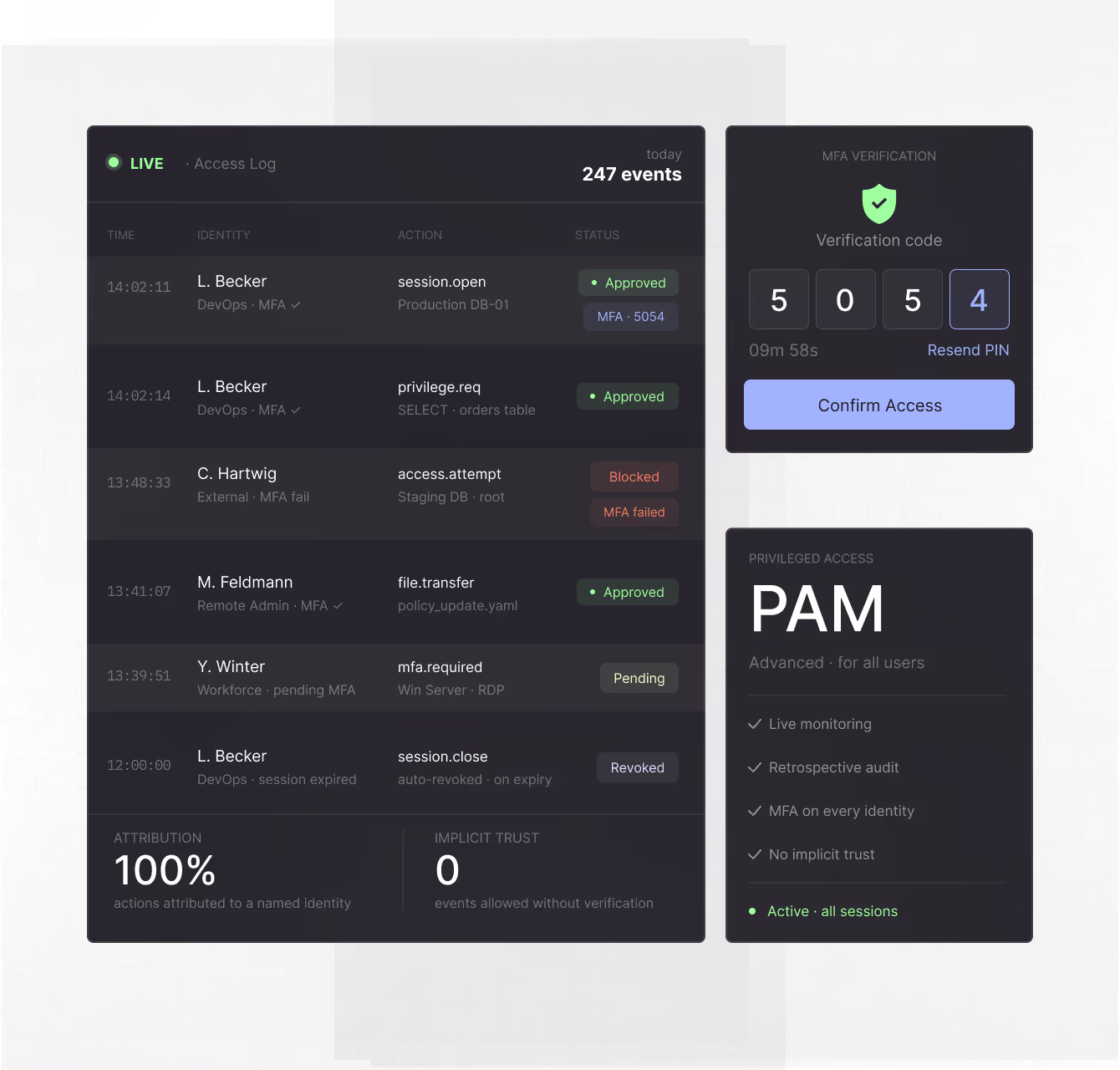
Implicit trust is completely eliminated. Every access and action can be assigned to a specific person and traced at any time — providing security and clarity in both operations and audits.
External Access: Granular, agentless, and without coordination chaos
Internal Access Management: Secure and simplify work from anywhere
Built for Zero Trust: Easily implement all building blocks such as Multi-Factor Authentication and Just-in-Time access
Always traceable: Automated compliance reporting, tamper-proof recordings, and audit trails
Advanced Privileged Access Management for everyone
Continuously review activities — live and retrospectively
Identity verification through Multi-Factor Authentication (MFA)
Productivity
Control Without Slowing Down Operations
Design Zero Trust so it simplifies daily work. Accesses are clearly defined, consistent, and run smoothly — for admins, external service providers, and internal teams. Security becomes an integral part of processes, not an additional hurdle.
External Access: Granular, agentless, and without coordination chaos
Internal Access Management: Secure and simplify work from anywhere
Built for Zero Trust: Easily implement all building blocks such as Multi-Factor Authentication and Just-in-Time access
Always traceable: Automated compliance reporting, tamper-proof recordings, and audit trails
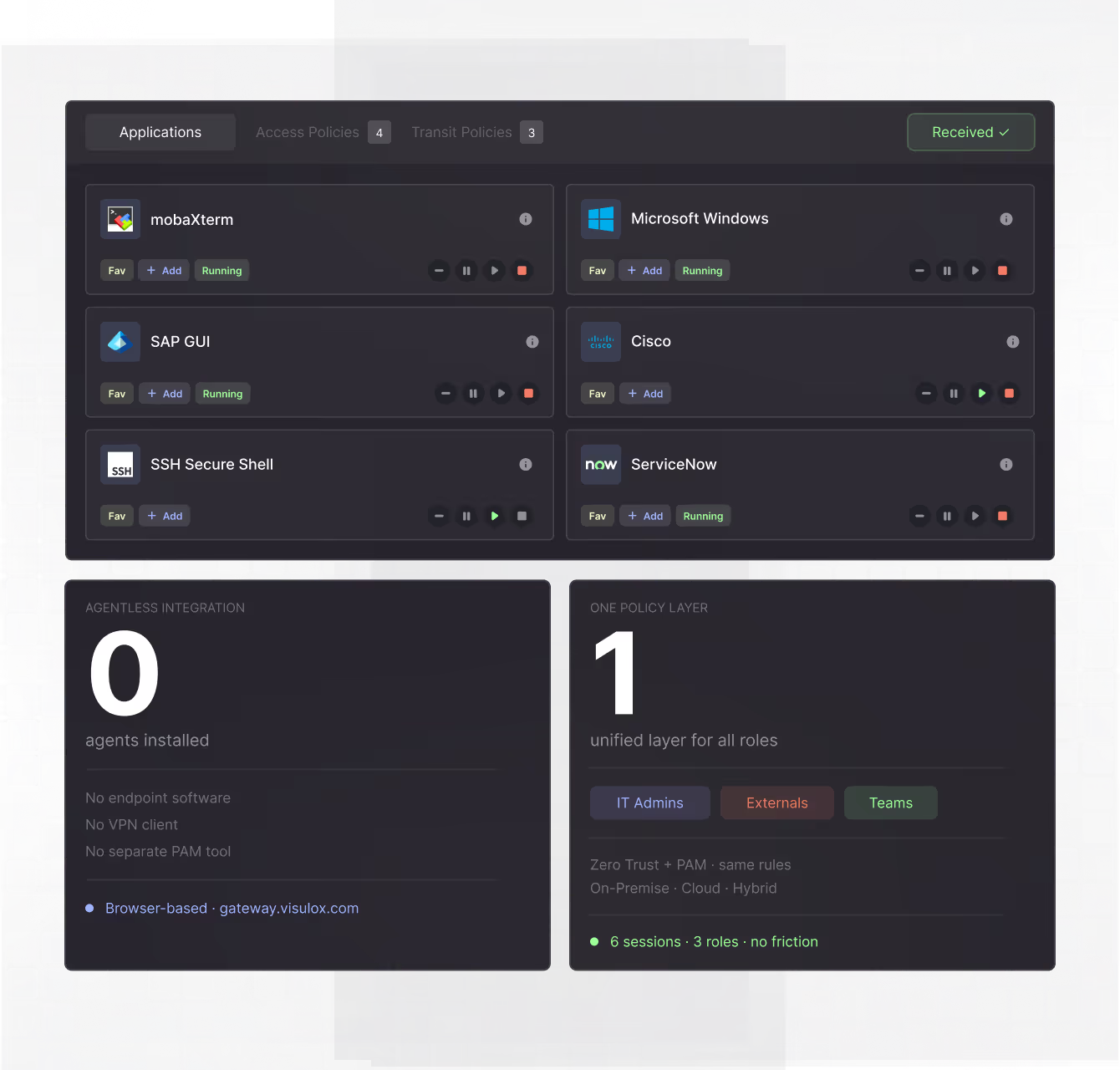
Unified Zero Trust and PAM approach
Agentless, seamless integration without tool chaos
Intuitive and user-friendly for admins and teams
Reporting
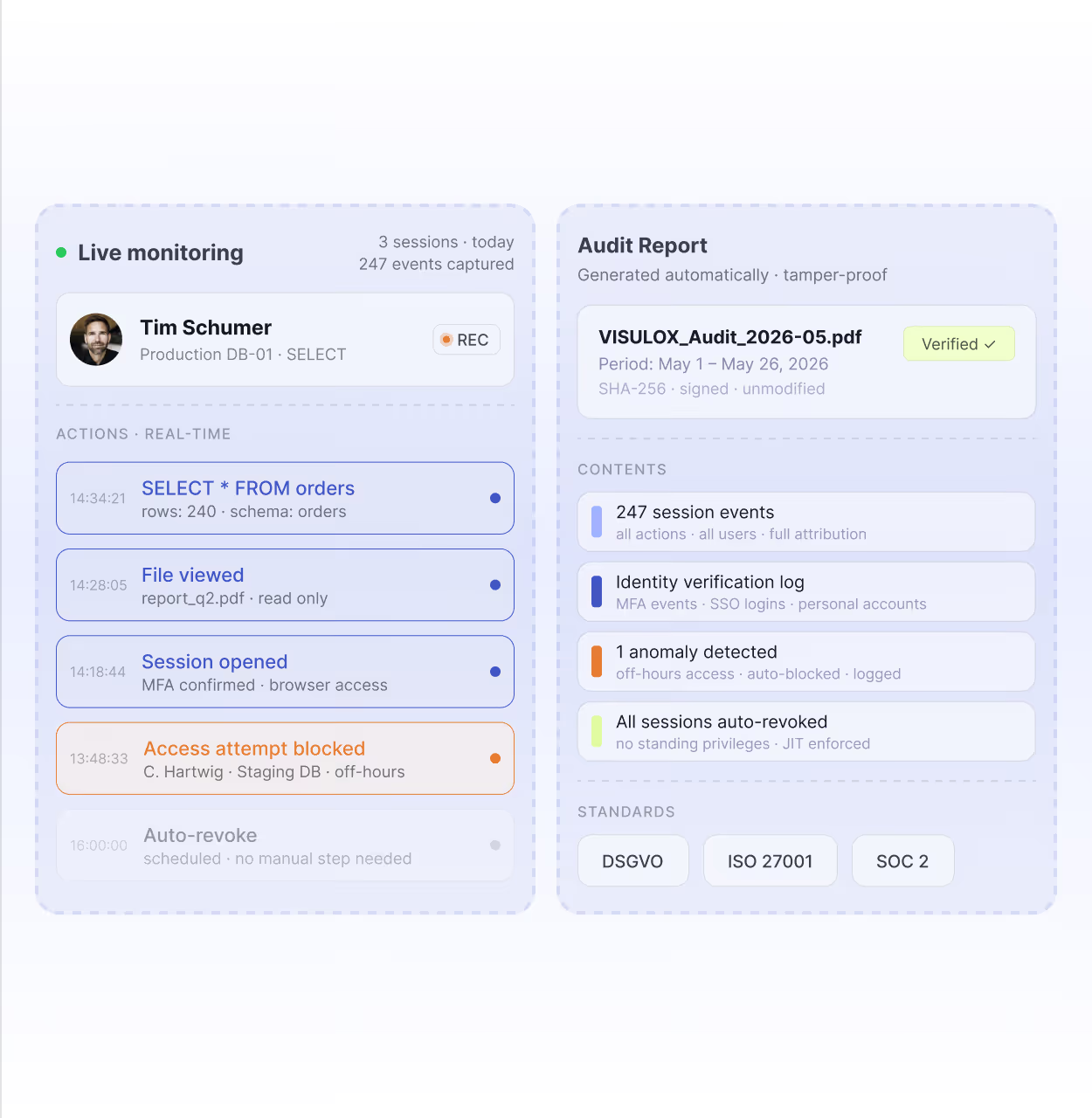
Identify Risks in Real Time
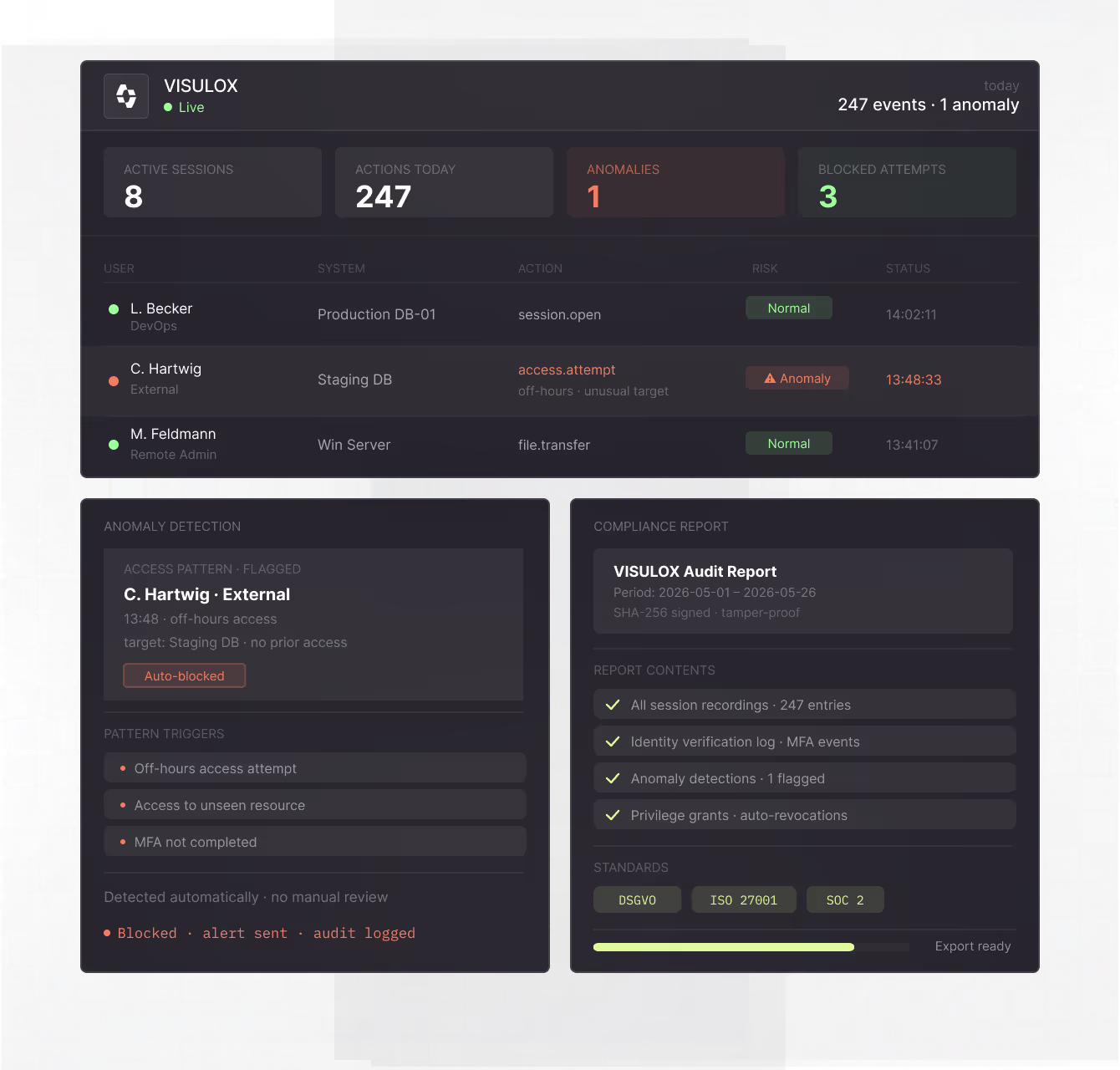
Automatically identify deviating user behavior. All actions are continuously monitored and evaluated. Detect risks early, and with a complete audit trail, you can not only ensure security — you can prove it at any time.
External Access: Granular, agentless, and without coordination chaos
Internal Access Management: Secure and simplify work from anywhere
Built for Zero Trust: Easily implement all building blocks such as Multi-Factor Authentication and Just-in-Time access
Always traceable: Automated compliance reporting, tamper-proof recordings, and audit trails
Automatic detection of suspicious access patterns
VISULOX Cockpit as central management and control interface
Compliance-ready and GDPR-compliant reports
Decentralized Remote PAM Platform
Why over 450 IT teams secure their systems with VISULOX

We use VISULOX as a gateway to secure our customer support environment. Through VISULOX, we establish a secure connection with our customers to assist them in implementing our products. VISULOX provides a secure method with key and video recording that meets the highest security and audit standards. Support is quick and personal.
VISULOX enables the management of information security through the privileged access control of users to various infrastructures with centralized management.
VISULOX works flawlessly, and the IT support is exceptionally reachable in emergencies. Moreover, the team also assists with other concerns, even if they are not directly related to VISULOX.
We can be sure that our R&D data is accessed exclusively by us. VISULOX gives us the assurance that external service providers are never 'unattended' and that no one can access critical information or, in the worst case, even share it.
Secure access to IT infrastructures can be presented very transparently. The system operates stably, even with over 1000 users. Our implementation of ISO 27001 is significantly supported, especially for large infrastructures.

VISULOX monitors service provider activities across servers – privileged multiple accounts are eliminated. Together with amitego, we have developed a transparent, auditable control system that precisely documents who did what and when.
Highly powerful, mature, and secure for privileged remote access by external service providers. First-class support and a forward-thinking development team at amitego. We are in close, ongoing contact with the vendor and can actively contribute to the product's evolution. Customer requests are addressed promptly.

VISULOX Ready in Days
Enterprise Security,
Without Enterprise Overhead
VISULOX stands for secure privileged access — clearly regulated and easy to operate. No hidden additional costs, no bloated projects, yet 100% secure and effective. Reduce complexity and operational costs.

Quick Deployment
VISULOX deploys agentlessly — without infrastructure changes, without downtime, without complex project planning. The solution runs in any existing environment and is BSI-compliant and NIS-2-ready.
Flexible Licensing
Your clients pay only for simultaneously active users — not for endpoints, servers, or IT assets. The licensing model is easy to explain and suited for short sales cycles. Purchase and subscription are equally available.
Growth Potential
VISULOX is often the entry point into a more comprehensive IAM/PAM project. Every implementation creates consulting needs around access rights, compliance, and IT security — and thus potential for further services.
Case Studies
VISULOX in Action – Real-world Results
From energy providers to international corporations: companies with high compliance requirements rely on VISULOX to comprehensively control and document privileged access.

From Remote Access to a Critical Access Platform
In three years, Delta Air Lines replaced its entire Oracle Secure Global Desktop infrastructure with VISULOX — building it into a Critical Access Platform for secure access to critical systems.
100%
of legacy infrastructure replaced with Visulox
0
direct network access paths to critical data systems
3
years to replace Oracle Secure Global Desktop
Compact, High-Availability Access Platform with Outstanding Support
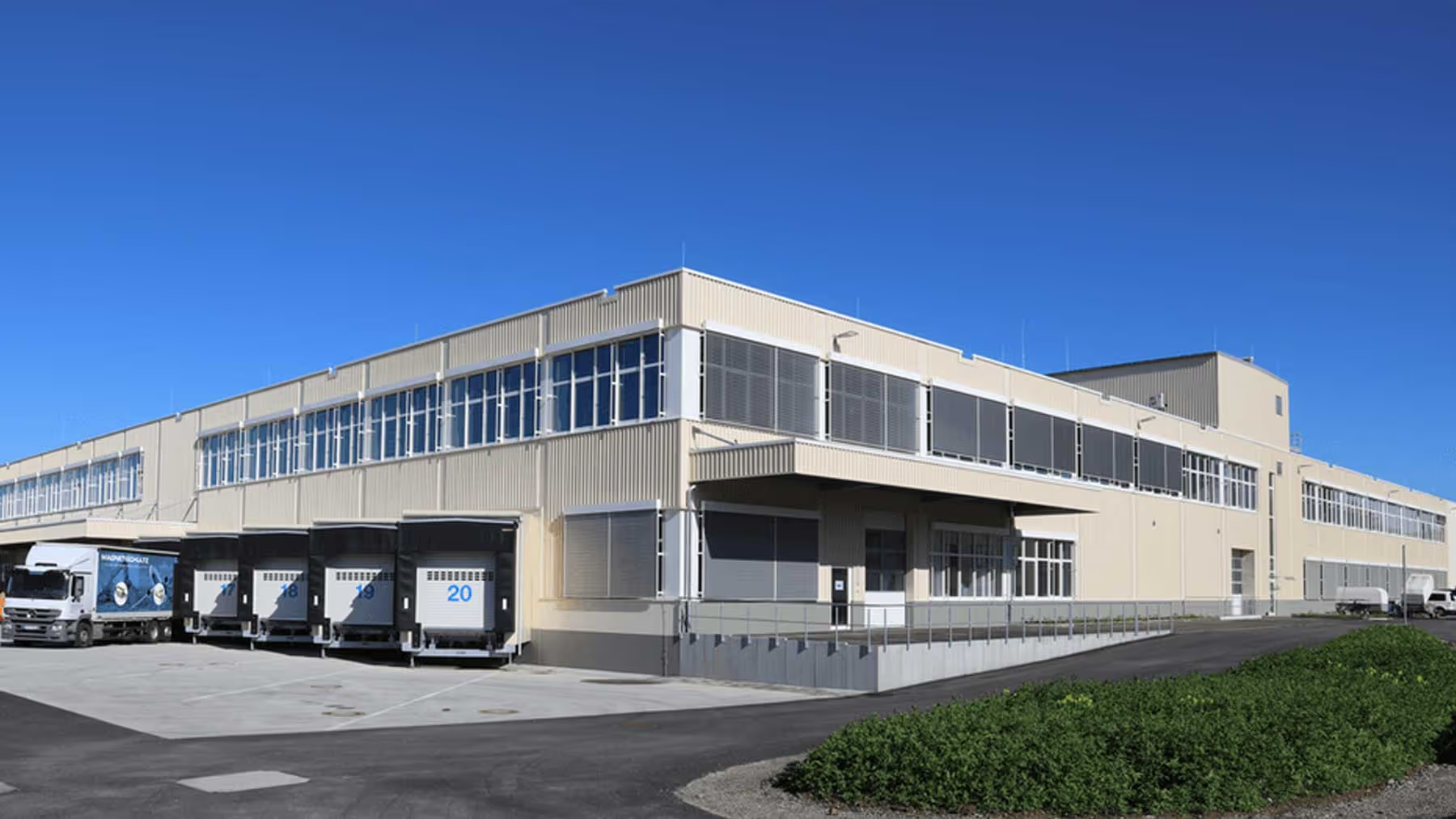
For over ten years, Magnet-Schultz has relied on VISULOX — a compact, high-availability access platform with all core capabilities and reliable German-speaking support.
100%
all core capabilities in one platform
+10
years of Visulox in production
8h
Maximum Support Response Time
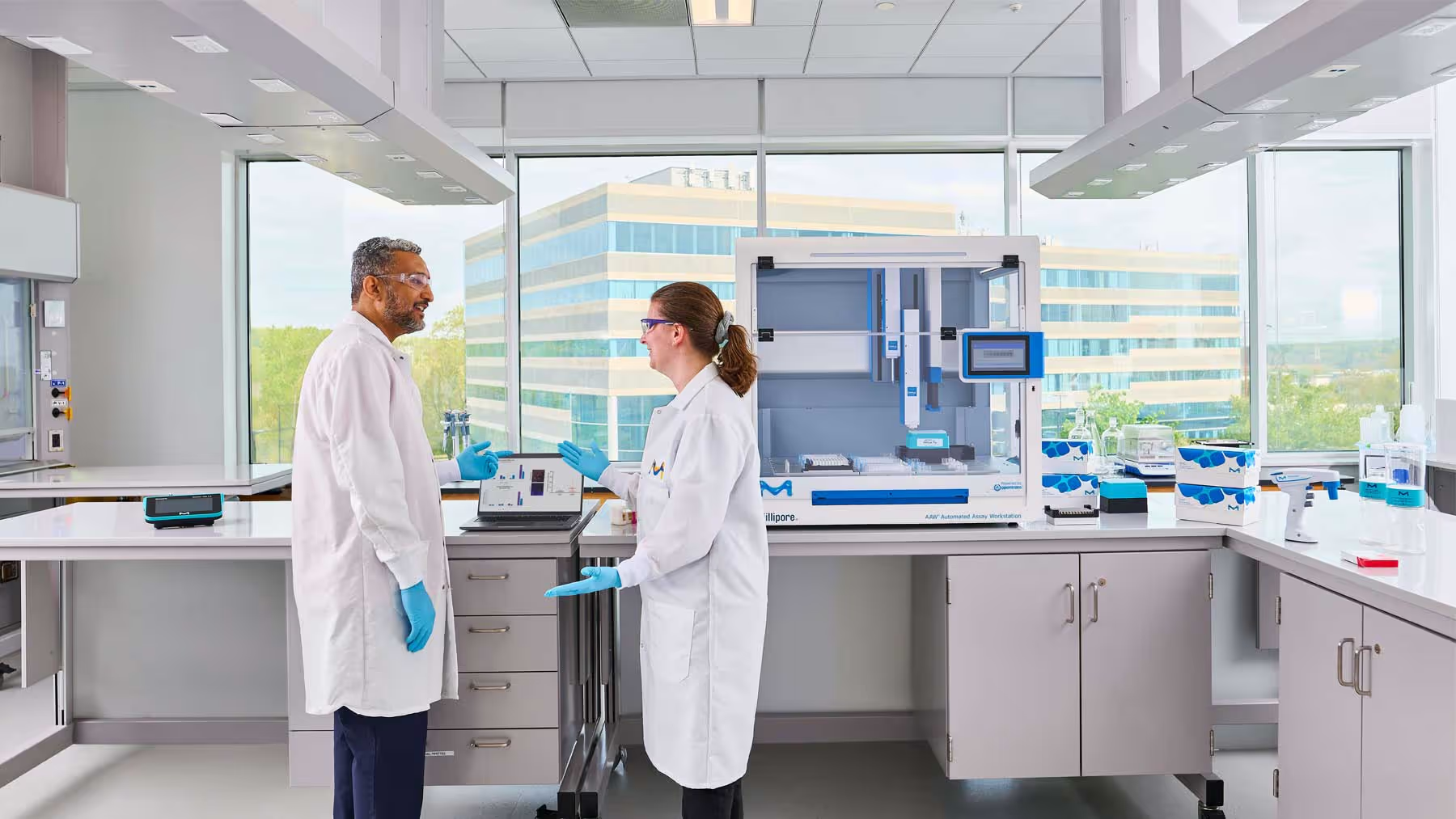
Merck KGaA Centralizes External Access
For over three years, Merck has centrally managed the remote access of external service providers through VISULOX — secure, auditable, and without VPN for third parties.
+3
years of VISULOX in production
100%
of external access centrally controlled and logged
+15
external service provider companies securely connected
Contact
Your direct path to secure remote access
Speak directly with a cybersecurity expert.


FAQ
What is Remote Privileged Access Management (Remote PAM) with VISULOX?
Remote Privileged Access Management (Remote PAM) controls and protects privileged access to IT systems from remote locations — by administrators, external service providers, or partners. VISULOX implements this approach consistently: access is managed centrally, granted on a time-limited basis, uniquely assigned to an individual, and fully documented. Direct connections to the target infrastructure are technically prevented. This ensures control, traceability, and security at all times.
How does VISULOX differ from classic VPN or PAM solutions?
Conventional VPN solutions grant broad network access without fine-grained control. Classic PAM solutions are often complex, costly, and designed primarily for internal users. VISULOX combines the advantages of both approaches: a gateway architecture without direct network access, time-limited just-in-time access, complete session recording, and an agentless architecture. The result: maximum control with minimal administrative effort — purpose-built for secure external access.
How does VISULOX support a Zero Trust strategy?
VISULOX implements Zero Trust consistently: no user has standing access rights — permissions are granted only when needed, based on the least-privilege principle (just-in-time access). Direct network connections are technically prevented through a protocol break. Every session is fully recorded and uniquely assigned to a single individual. This creates a zero-standing-privileges model that also securely integrates external service providers and partners.
Why does VISULOX have a lower total cost of ownership (TCO)?
VISULOX is ready to use within a few days — without complex implementation projects and without changes to endpoints. Its agentless architecture significantly reduces maintenance effort. Licensing by concurrent users avoids hidden costs. Together with integrated German-language support and the avoidance of costs from security incidents, VISULOX demonstrably reduces complexity and operating costs.
Is VISULOX suitable for enterprise environments?
Remote Privileged Access Management (Remote PAM) governs and secures privileged access to IT systems from remote locations — by administrators, external service providers, or partners. VISULOX implements this approach consistently: access is granted centrally, time-limited, uniquely assigned to an individual, and fully documented. Direct connections to the target infrastructure are technically prevented, ensuring control, traceability, and security at all times.